The Challenge
A financial services company faced significant challenges with their disaster recovery approach:
High recovery time objective (RTO) of 8+ hours Recovery point objective (RPO) of 24 hours, risking significant data loss Expensive dedicated hardware at a secondary data center Limited testing capabilities due to complexity No protection against regional cloud provider outages
The Solution
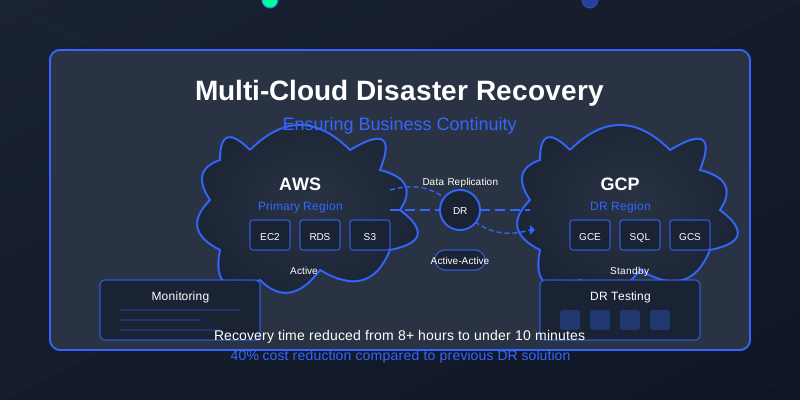
I designed and implemented a multi-cloud disaster recovery solution that leveraged the strengths of multiple cloud providers:
#
1. Active-Active Architecture
Implemented an active-active setup across AWS and GCP, distributing workloads and enabling immediate failover.
#
2. Automated Failover System
Created automated detection and failover mechanisms that responded to availability issues without human intervention.
#
3. Data Synchronization Strategy
Implemented near real-time data replication between clouds using database-specific technologies and cloud provider tools.
#
4. Infrastructure as Code
Used Terraform to define identical infrastructure across both cloud providers, ensuring consistency.
#
5. Regular Testing Framework
Established a schedule of non-disruptive DR tests that verified recovery capabilities without affecting production.
The Results
The multi-cloud DR solution delivered exceptional results:
Recovery time reduced from 8+ hours to under 10 minutes Recovery point objective improved from 24 hours to less than 5 minutes 40% cost reduction compared to previous DR solution Successful monthly automated testing without disruption Enhanced protection against provider-specific outages
Key Technologies Used
AWS and GCP for multi-cloud implementation Terraform for infrastructure definition CloudFormation and Deployment Manager for cloud-specific resources Database replication technologies (AWS DMS, GCP Data Transfer) Custom monitoring and automated failover scripts Global load balancing with health checks
My Approach to Disaster Recovery
When designing DR solutions, I focus on these principles:
1. **Business Impact Analysis**: Understand the cost of downtime to align technical solutions with business needs.
2. **Defense in Depth**: Layer multiple resilience strategies for comprehensive protection.
3. **Automated Recovery**: Minimize human intervention during disaster scenarios.
4. **Regular Testing**: Untested disaster recovery is not disaster recovery.
5. **Continuous Improvement**: Regularly review and enhance DR capabilities.
Contact Me for Disaster Recovery Planning
If your organization needs to strengthen its business continuity capabilities or modernize an existing disaster recovery solution, I can help design and implement a robust multi-cloud approach tailored to your requirements and budget.